72 Hours: When the Lights Go Out
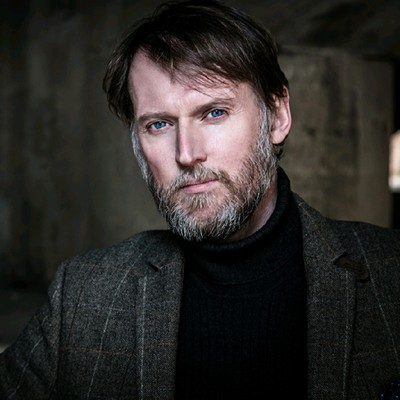
By Benjamin J Butler, Futurist, United Kingdom
October 31, 2026
A personal note.
“The great wave that was our civilization has spent itself. We are in the undertow now, and we don’t even realize it.” — Peter Kingsley, Catafalque
It’s not easy to discuss collapse.
Early on in my finance days in the 1990s I began to learn about cycles of history. It was useful information for investment decisions, to observe the ebbs and flows of the economy and capital flows. I had some great mentors (initially economists, strategists and investors) and I also somehow stumbled across some interesting books which spoke to me across time. Eventually I began to discern broader cycles in war and peace, technology and civilisation itself. Even from the early days, though, I had a foreboding feeling that one day the entire system might unravel. Over the years I have met many visionaries and futurists who have fled to (or at least purchased second homes in) secluded parts of the world, including the Andes, the Pyrenees, New Zealand and parts of Asia, in preparation for a collapse of industrial civilisation. I spend half my year nowadays in Peru.
But collapse is not a topic for “polite society”. Clients who engaged me for public talks acknowledged that I was forecasting a series of crises in the 2020s but usually asked me to tone it down: “focus on the positives”, they would say. It has often been behind closed doors that I have explored and discussed the darkest trajectories of societies and civilisation.
My clearest foresights about the future come when empirical analysis, intuition and imagination converge. Several years before Covid, I found myself reading John M. Barry’s The Great Influenza cover to cover: the story of the 1918 flu, which killed more people than the First World War itself. The planet seemed overdue a serious pandemic, organisations from the WHO to the World Economic Forum were making plenty of noise about preparedness, and I had an intuitive sense that one would arrive in the 2020s.
Today I find myself wondering why at least 18 governments, plus the EU, are at fever pitch, urging citizens to prepare for at least 72 hours of crisis, including breakdowns in the grid and food systems. It fits the risks we profiled in our 18-month outlook (see earlier Substack posts with Yuri Van Geest): geopolitical risk, including war, hybrid war and cyber war; economic and financial crisis; technological risk, including artificial intelligence going wrong or going rogue; social discord; and ecological crisis, with a gargantuan El Niño hitting this year.
In some ways the precise trigger matters less than it seems. Before the pandemic, I could not have forecast its exact origins, but I could imagine it, intuit it and justify it analytically. The same tests apply today: our systems lack resilience; there is a litany of catalysts for a short-term crisis; and governments around the world are singing from the same hymn sheet. So I thought it worth exploring what 72 hours of darkness might mean in the UK.
The warnings
On 22 October 2026 the Cabinet Office launched Be Ready, a three-year campaign asking every household to hold enough supplies to get through three days without power, water, phones or internet: nine litres of water per person, food, medicines, a torch, a radio and some cash. Defence Secretary Wes Streeting warned that hostile states could target essential services through cyber-attack and sabotage. Only 13 per cent of Britons feel well prepared.
Britain is not alone. Most European governments now advise 72 hours; the Nordics, Estonia, Switzerland and Taiwan say a week, and Germany up to 10 days. But how the US military is preparing might be the most insightful. Under its FORTRESS plan, the Pentagon has ordered every major base in the continental United States to be ready to operate independently for at least 90 days if war or disaster cuts off power, water, fuel or communications. As Pentagon spokesman Sean Parnell put it: “Power is combat now.” Households are asked to prepare for three days; the military is planning for ninety.
The economist Martin Armstrong argues that Be Ready is an admission of something the state has avoided saying for years: a modern economy can be crippled without a single building being destroyed. Electricity is the keystone system. Almost every other critical service sits on top of it. As the energy analyst Nate Hagens puts it: “our culture is energy blind.”
The first hours
The UK grid has never failed completely, but government planning assumes it could. Restarting a dead national network, known as Black Start, would take up to five days if no equipment is damaged, and some areas could wait weeks if transformers are destroyed. Power would return in patches. And who knows, there might be a series of attacks or malfunctions, not just a one-off.
The closest recent analogue is Spain and Portugal on 28 April 2025. Trains stopped, phones failed, and traffic lights and ATMs went dark for 60 million people. Eight people died. Iberia was lucky: the outage began at midday in spring and most power was back within about ten hours. A British collapse on a freezing January evening would be a different event.
Second-order effects: phones, water and money
Communication goes first. Only about 5 per cent of mobile mast sites have six hours or more of backup power, and digital landlines now die with the router. Within hours, large parts of the country could lose the ability to call 999. Radio takes over: government planning would route emergency messages through BBC Radio 2 and Radio 4, and since long wave was switched off in June, coverage rests on FM and DAB transmitters running on generators. A battery, wind-up or car radio becomes most households’ lifeline. If you believe what they say! Many will doubt official information, as trust in government has fallen significantly.
Water and sewage come next. Pumping stations need power; their backup generators need diesel; the tankers need fuel from forecourts whose pumps no longer work. Each backup system assumes the others are still running. Hagens argues that a “Great Simplification” is not a question of if but of when: our societies will have to run on far less energy, becoming smaller, more local and less complex. Whether that happens chaotically, as collapse, or as a managed transition is, for him, the real question.
Then there is money. Britain is one of the most cashless economies in the world. A household can have a healthy bank balance and still be unable to buy bread. Gold bullion in a Swiss bank or an ETF might not help either! Hence the advice to keep physical notes and coins.
Financial markets would stop too. The London Stock Exchange would almost certainly suspend trading; during the First World War it closed for about five months. The shock would not stay in Britain, and when markets reopened, the dislocation would be immense.
Food: no slack
Britain imports roughly 45 to 50 per cent of its food and runs on just-in-time logistics; supermarkets hold days of stock, not weeks. The National Audit Office names a national power outage as one of the catastrophic risks to the chain. Warehouse systems stop, chilled stock spoils, tills fail and lorries cannot refuel. This is where the old warning that Britain is nine meals from anarchy stops being a slogan. Three days is, not by coincidence, exactly what Be Ready asks households to cover.
Third-order effects: health, order and trust
Health care strains quickly. People at home on oxygen concentrators or dialysis face danger within hours, and care homes and the isolated elderly are most exposed in a cold snap.
Disorder is not inevitable. In my own experience of earthquakes in Japan, the cooperation between citizens was remarkable: people queued, shared and looked after one another. In much of rural Britain, I would expect people to pull together, as communities did during floods and the pandemic. In some cities, though, who knows what would happen? If this goes global, as is likely, some countries will be worse than others, depending on social cohesion and underlying crime.
The longer effect is on trust. If restoration takes a week, the political fallout could last years. As the Astronomer Royal, Lord Rees, told The Times: “Within a few days it might lead to a real social crisis.”
Who would do this?
It is said that the likeliest causes of a major outage remain mundane: severe weather (remember we are facing a super El Niño), equipment failure, or a cascade nobody predicted. Iberia’s collapse was traced to grid instability, and Heathrow closed for a day in March 2025 because a single substation, carrying a known fault, caught fire.
This time it might be different. Defence and security voices point to the greater danger of deliberate attack. If NATO continues to arm Ukraine and encourage it to strike sensitive locations within Russia, this might further poke the bear. If the US and Israel launch another wave of attacks against Iran, Iran might respond by cutting undersea cables and launching cyber-attacks. The fear is not new: former US Defense Secretary Leon Panetta warned years ago that an attack on the power grid could be a “cyber-Pearl Harbor.” A hostile state would not need to black out the whole country: hitting a few transformers or interconnectors during a cold snap, while spreading disinformation, could achieve most of the effect. Large transformers take many months to replace. Some analysts also point to the possibility of a false flag, in which a state, or factions within it, orchestrates an attack and blames a foreign actor, as Japan did with the Mukden incident to justify invading Manchuria.
Conclusions
The pattern is consistent: the grid fails, and within hours phones, payments and fuel follow; within days water, food and health care strain; and within a week the question becomes whether social trust holds.
Three days of supplies in every home buys time, which is all a household can do. The rest depends on decisions the state and industry make now. As Hagens puts it: “We’re not really facing a shortage of energy, we’re facing a longage of expectations.”
Three broader thoughts.
First, recollect your learnings from the Covid pandemic. Prepare, but then stay in the moment. What I think most likely is not one clean national blackout but a sustained period of rolling ones, arriving in waves, much as Covid’s variants did. Remember that part of preparation is building community.
Second, mindset always matters. Something good can always come out of a crisis. After the pandemic, many people rethought their lives: they changed careers, took up new hobbies, began meditating and asked what their lives meant.
Third, crises like this are part of a longer unravelling of the old systems, institutions, stories and metaphors of industrial civilisation. Significant interruptions will likely be a necessary part of a process of dying and birthing.
Ultimately, a more enlightened, technologically advanced and ecological civilisation is wanting to emerge. Such a society, in harmony with ecological principles, will by definition be resilient. Since the onset of the Industrial Revolution, and arguably much, much longer, many societies have diverged from the principles of nature and ecology. As wisdom keepers such as Mindahi Bastida, a representative of the Council of the Eagle and the Condor, have said, we have forgotten our “original instructions”. However, it is encouraging to see, especially in the conversations of the young, that we are beginning to remember.
It might still be early days, but that transition to ecological civilisations, rather than warnings about short-term risk alone, is the main focus of the Embassy of the Future, and this is what future essays will explore.
“Often disaster has made room for greater fortune: many things have fallen so that they might rise higher.” — Seneca, Letters to Lucilius, 91